



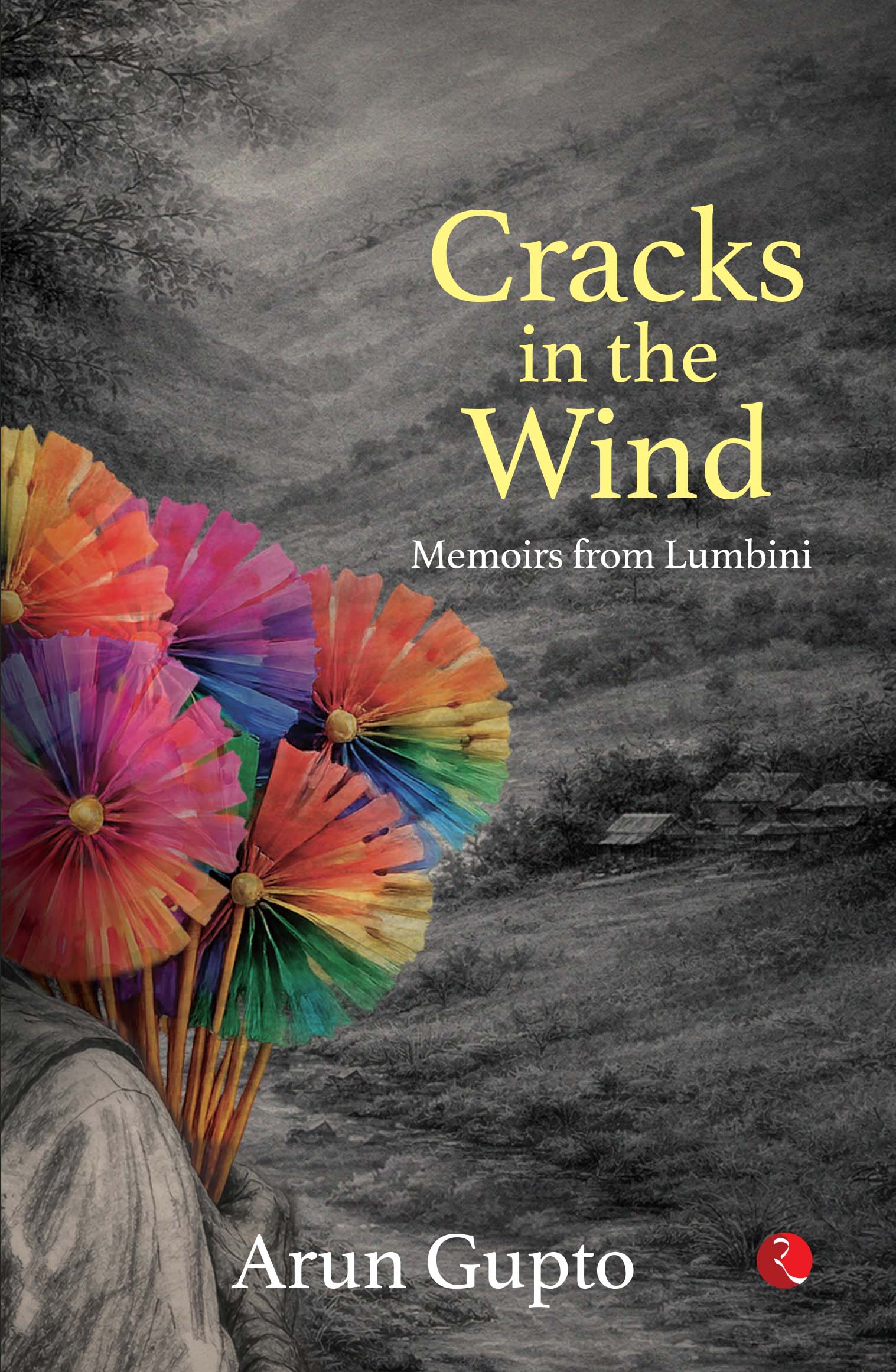
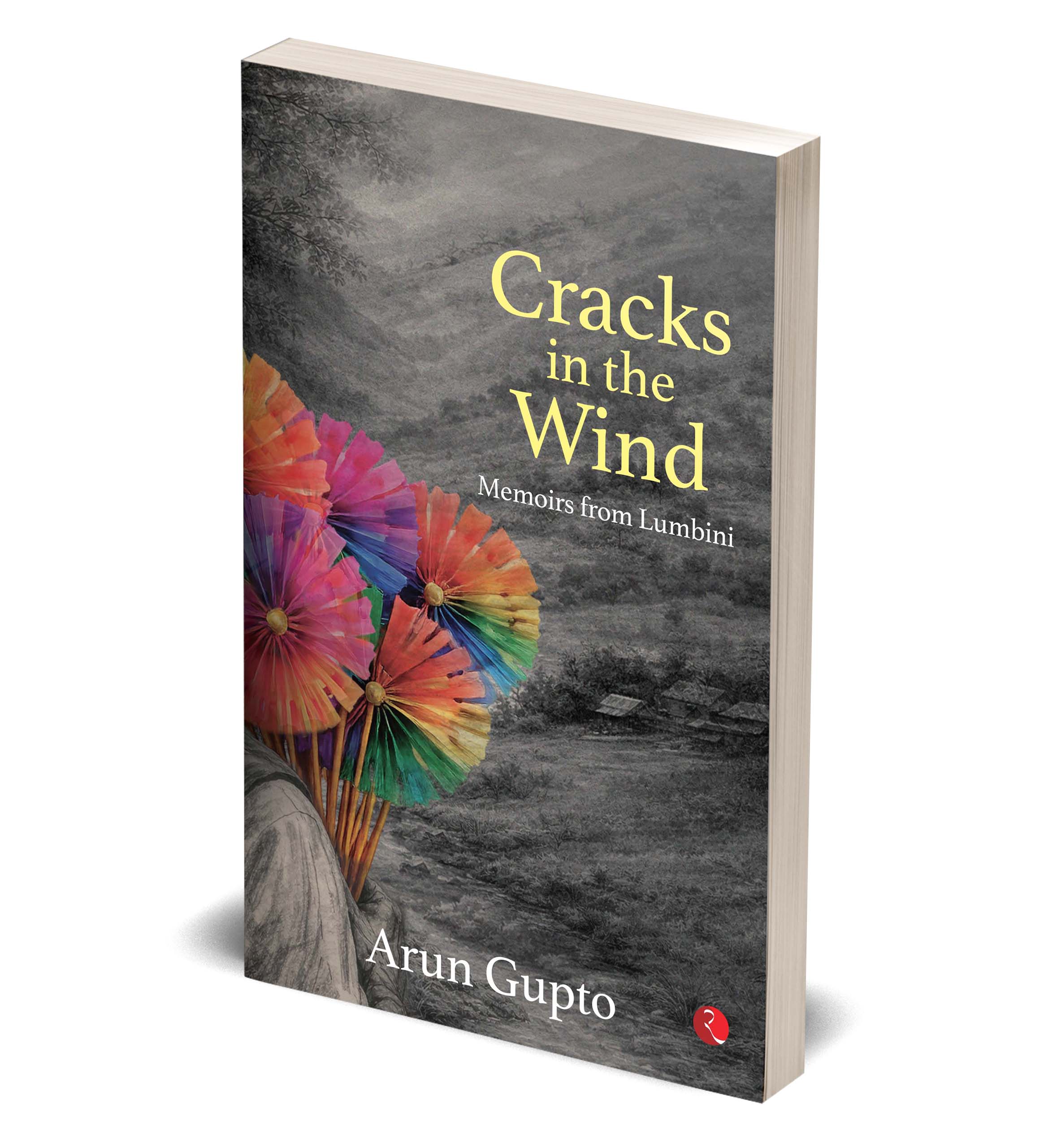
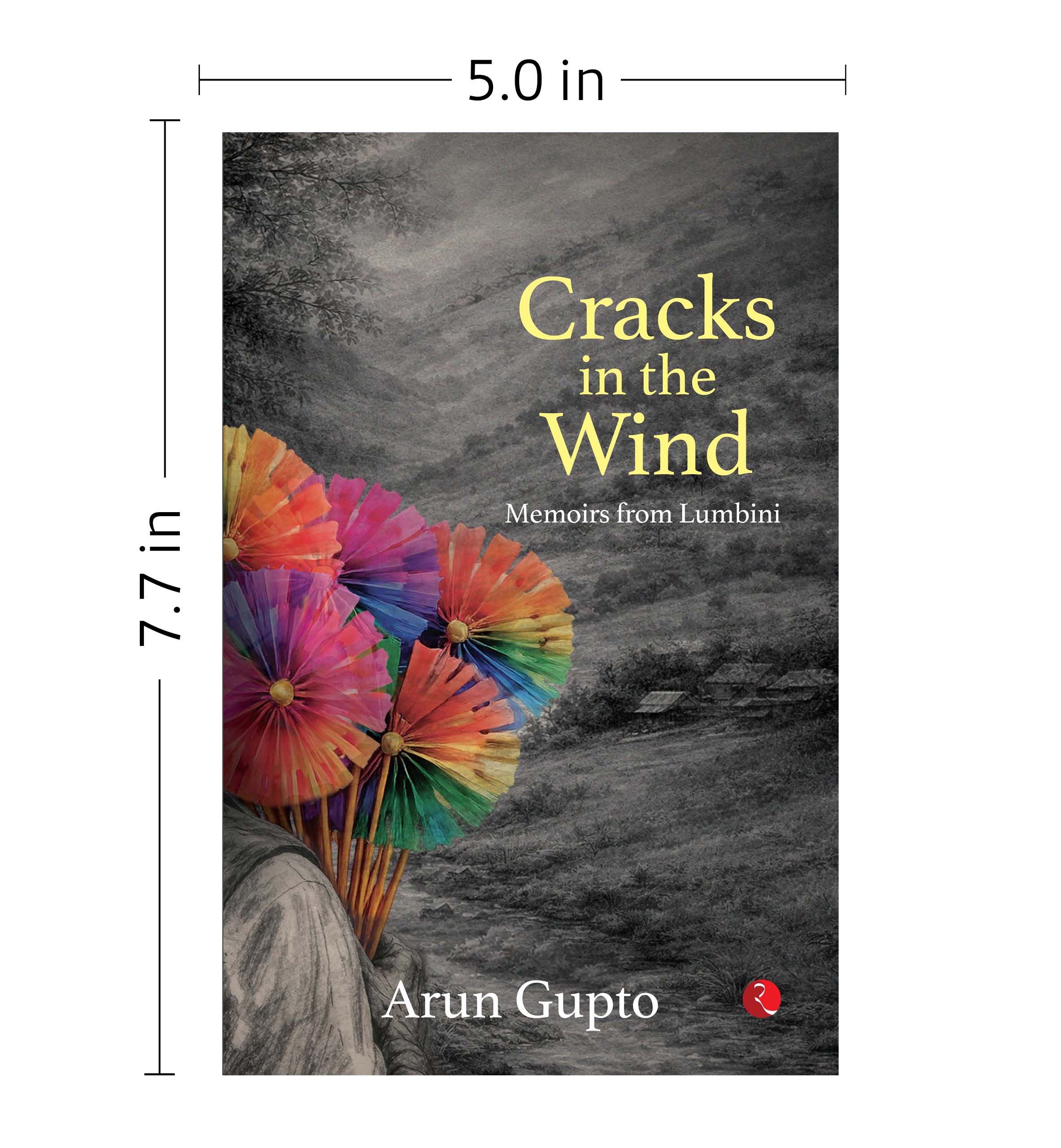
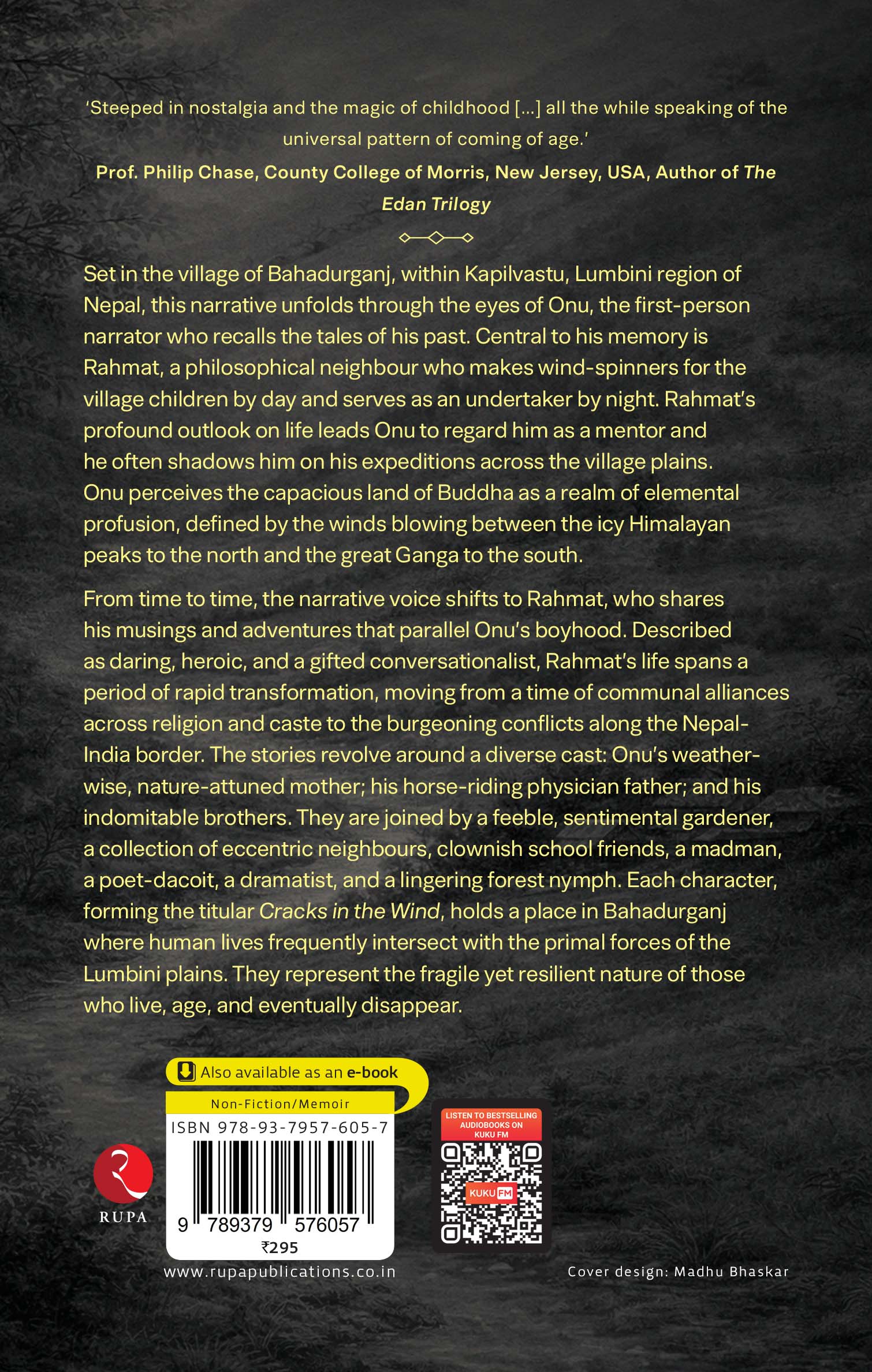
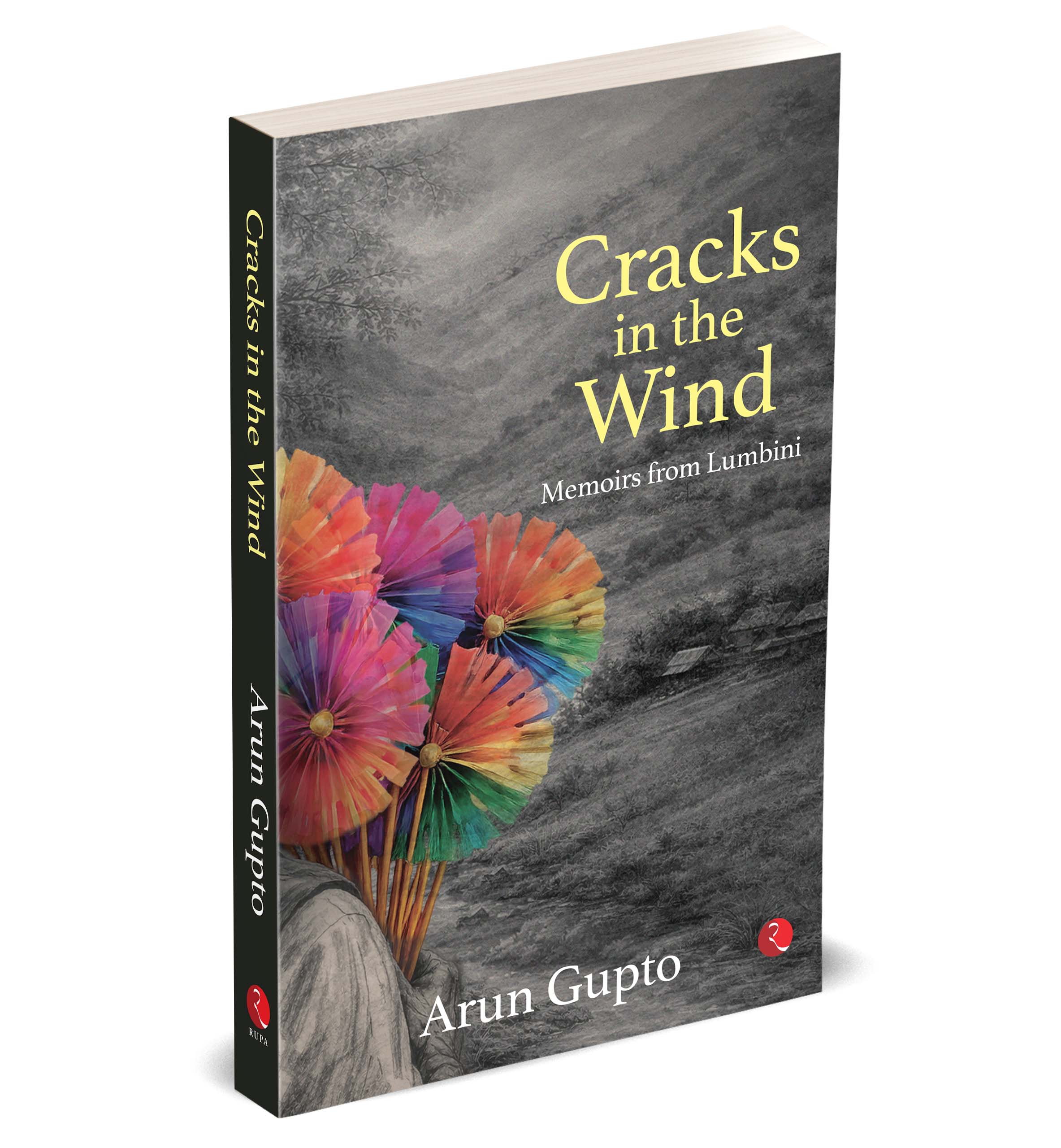


Set in the village of Bahadurganj within Kapilvastu, Lumbini region of Nepal, this narrative unfolds through the eyes of Onu, the first-person narrator who recalls the tales of his past. Central to his memory is Rahmat, a philosophical neighbour who makes wind-spinners for the village children by day and serves as an undertaker by night. Rahmat’s profound outlook on life leads Onu to regard him as a mentor and he often shadows him on his expeditions across the village plains. Onu perceives the capacious land of Buddha as a realm of elemental profusion, defined by the winds blowing between the icy Himalayan peaks to the north and the great Ganga to the south.
From time to time, the narrative voice shifts to Rahmat, who shares his musings and adventures that parallel Onu’s boyhood. Described as daring, heroic, and a gifted conversationalist, Rahmat’s life spans a period of rapid transformation, moving from a time of communal alliances across religion and caste to the burgeoning conflicts along the Nepal-India border. The stories revolve around a diverse cast: Onu’s weatherwise, nature-attuned mother; his horse-riding physician father; and his indomitable brothers. They are joined by a feeble, sentimental gardener, a collection of eccentric neighbours, clownish school friends, a madman, a poet-dacoit, a dramatist, and a lingering forest nymph. Each character, forming the titular Cracks in the Wind, holds a place in Bahadurganj where human lives frequently intersect with the primal forces of the Lumbini plains. They represent the fragile yet resilient nature of those who live, age, and eventually disappear.