



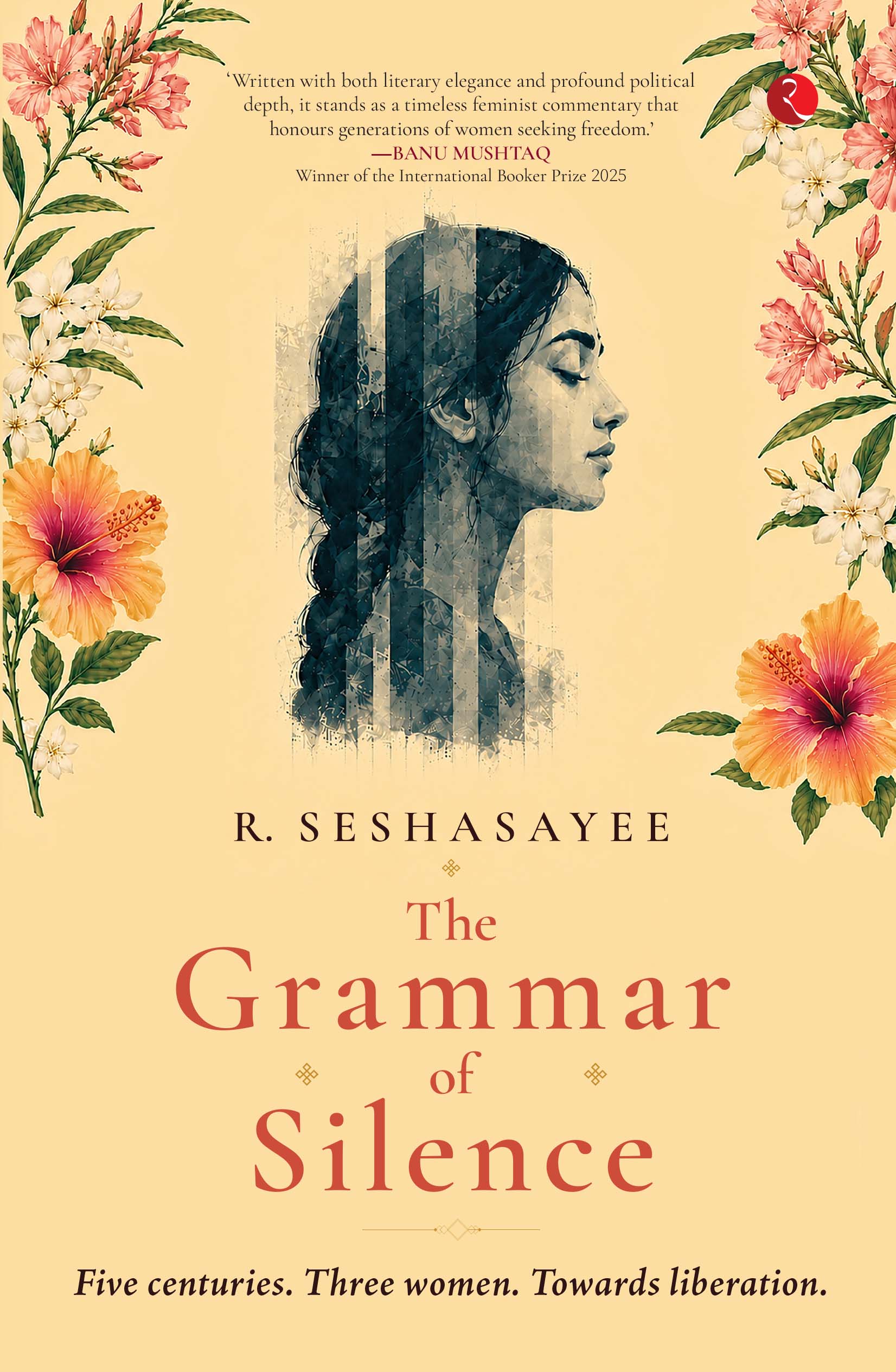
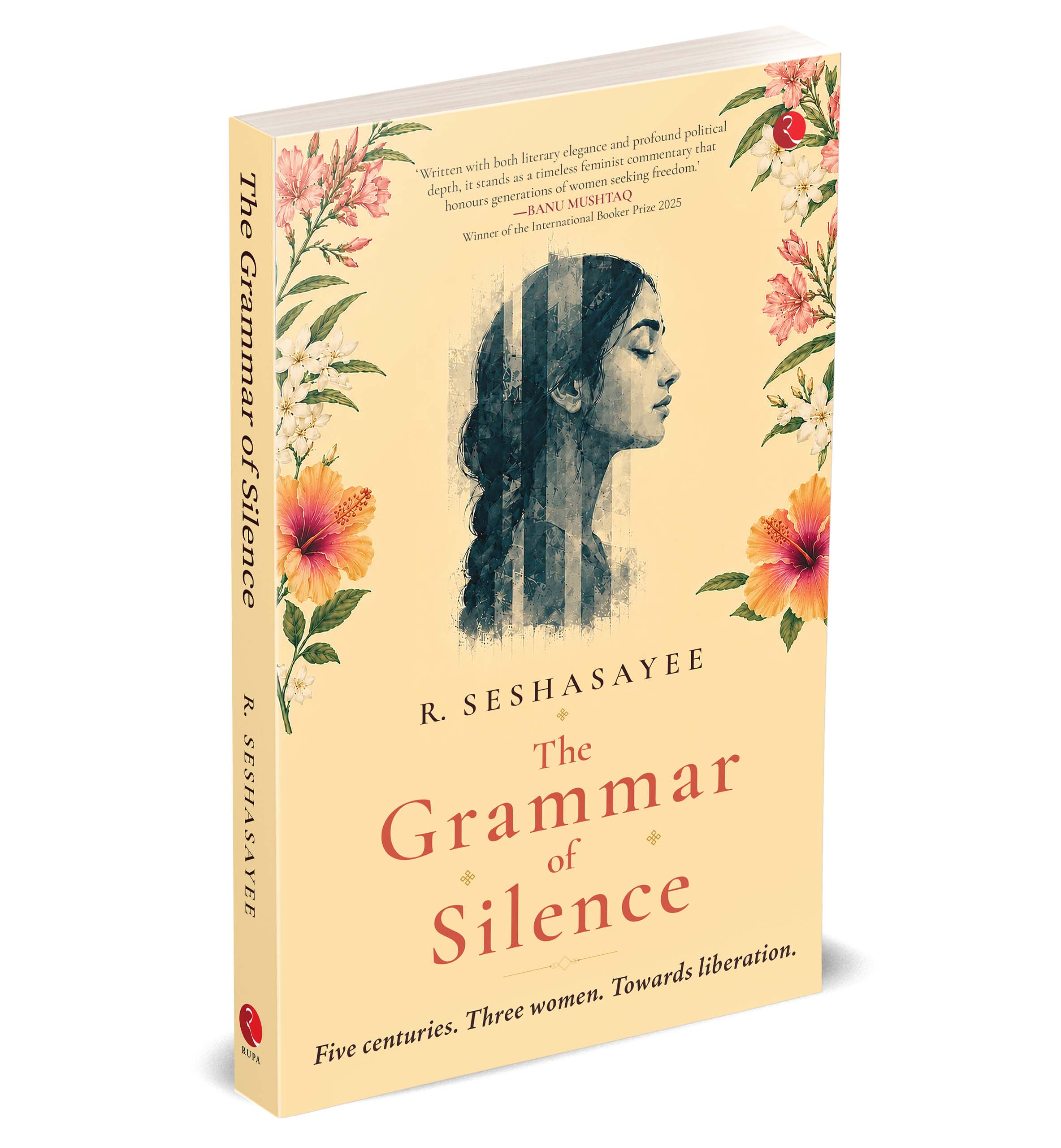


The Grammar of Silence is woven around the lives of three women—Dharma, Vinodhini and Mary—who dare to claim their voice and space in a society that has been designed to deny them both.
The narrative traverses five centuries of Tamil history, each era showing a society in flux, even as the women fight their individual battles to escape from the tyranny of an unyielding patriarchy. The style of storytelling is unique, with the three protagonists retaining their identities across eras.
Dharma, intellectually curious and an anomaly in the ritual-bound Brahminical world of the seventeenth century, chooses to write her own rebellious script. The beauteous Vinodhini, a courtesan in the Thanjavur Maratha palace in the eighteenth century, learns to carve out her agency even as the glamorous world of the devadasi community crumbles around her. Born to a lower-caste mother, Muthu manages to climb accidental ladders to claim unimaginable success as Dr Mary Amelia.
Although their diverse stories span five centuries, the three women share a common road in their quest for empowerment.
Seshasayee’s luminous prose remarkably chronicles the vibrant customs and traditions of Tamil land, more particularly the delta region around Thanjavur. Sweeping in scope, the novel deals with troubling themes like the perils of child marriage, the exploitation of devadasis, the struggles of the Dalit woman, and the continued objectification of women in modern India.
Intensely researched and powerful, The Grammar of Silence asks hard questions about patriarchy and celebrates feminism in its truest form.